Sunday, February 20, 2011

Museum District, Houston, Texas


To the casual visitor, Houston is an endless matrix of freeway flyovers and frontage roads (spelled "frge" on my GPS), legal "U"-turns, and LA-style traffic. Beneath the radar though, there is a compelling cultural beachhead, resulting from the tastes created with vast wealth since oil first flowed at Spindletop in Beaumont in 1901 and more recently from the huge legions of foreign born workers imported to span the Oil & Gas infrastructure. Much of this hidden ambience is to be found in the museum district, southwest of downtown, which includes Rice University and the Houston Museum of Fine Arts as well as a wealth of restaurants in the area, especially on Westheimer Ave. Montrose is lined with the remnants of old mansions including the neoclassical 1912 Link-Lee House (purchased by oilman Thomas Lee in 1916), designed by Sanguinet, Staate & Barnes, and part of University of St. Thomas since 1947.

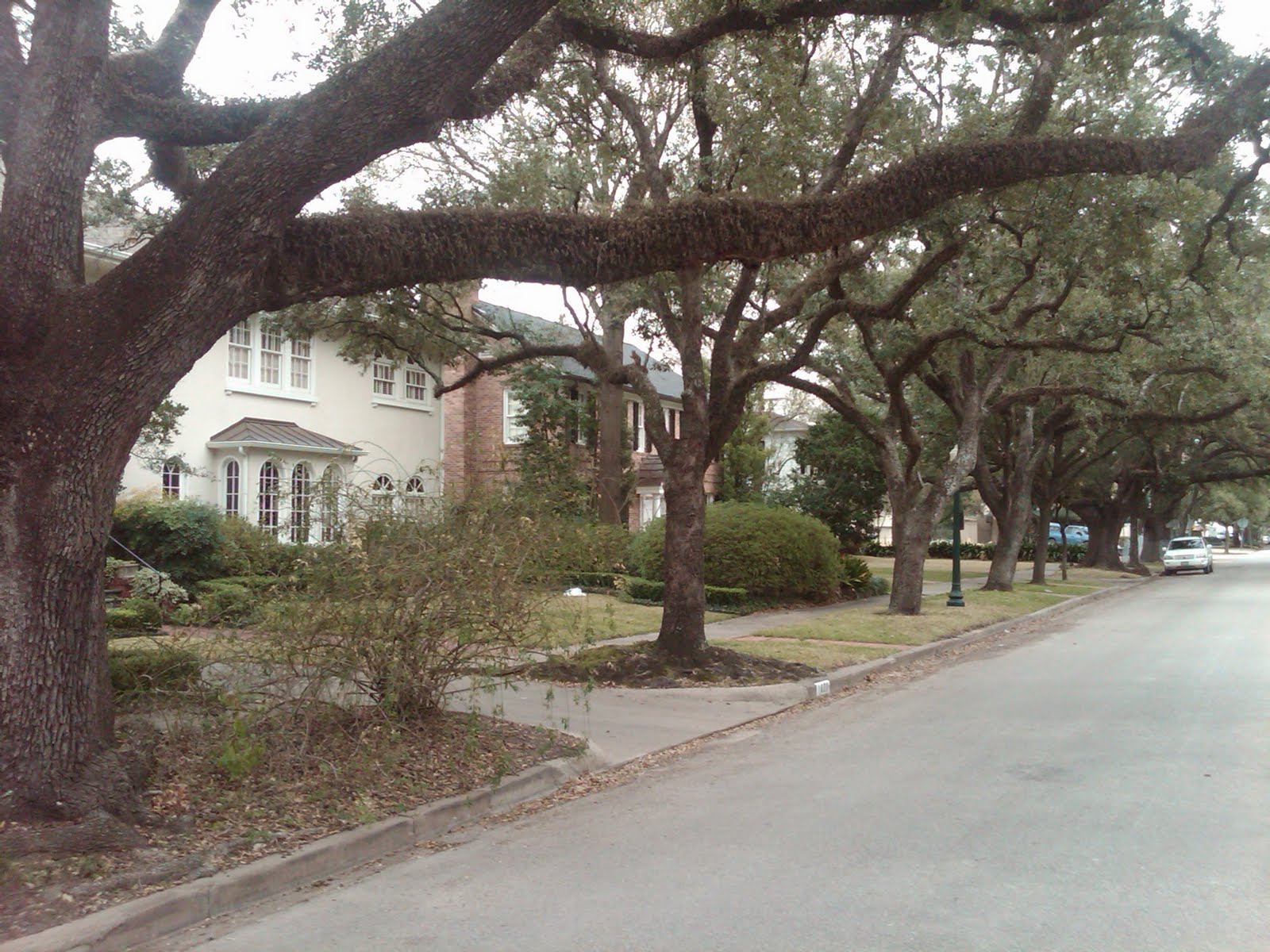
Spectacular residences line Sunset Ave., especially at Hazard St., live oaks lining the streets, these evergreens providing shade year round. The Houston MFA has a considerable French Impressionist collection and 2 Picassos as well. Across Binnosset St. is a sculpture yard. The Contemporary Arts Museum is more interesting as an architectural statement - it is a stainless steel Kunsthalle, the exhibits are very cutting edge.

Rice University, Houston, Texas


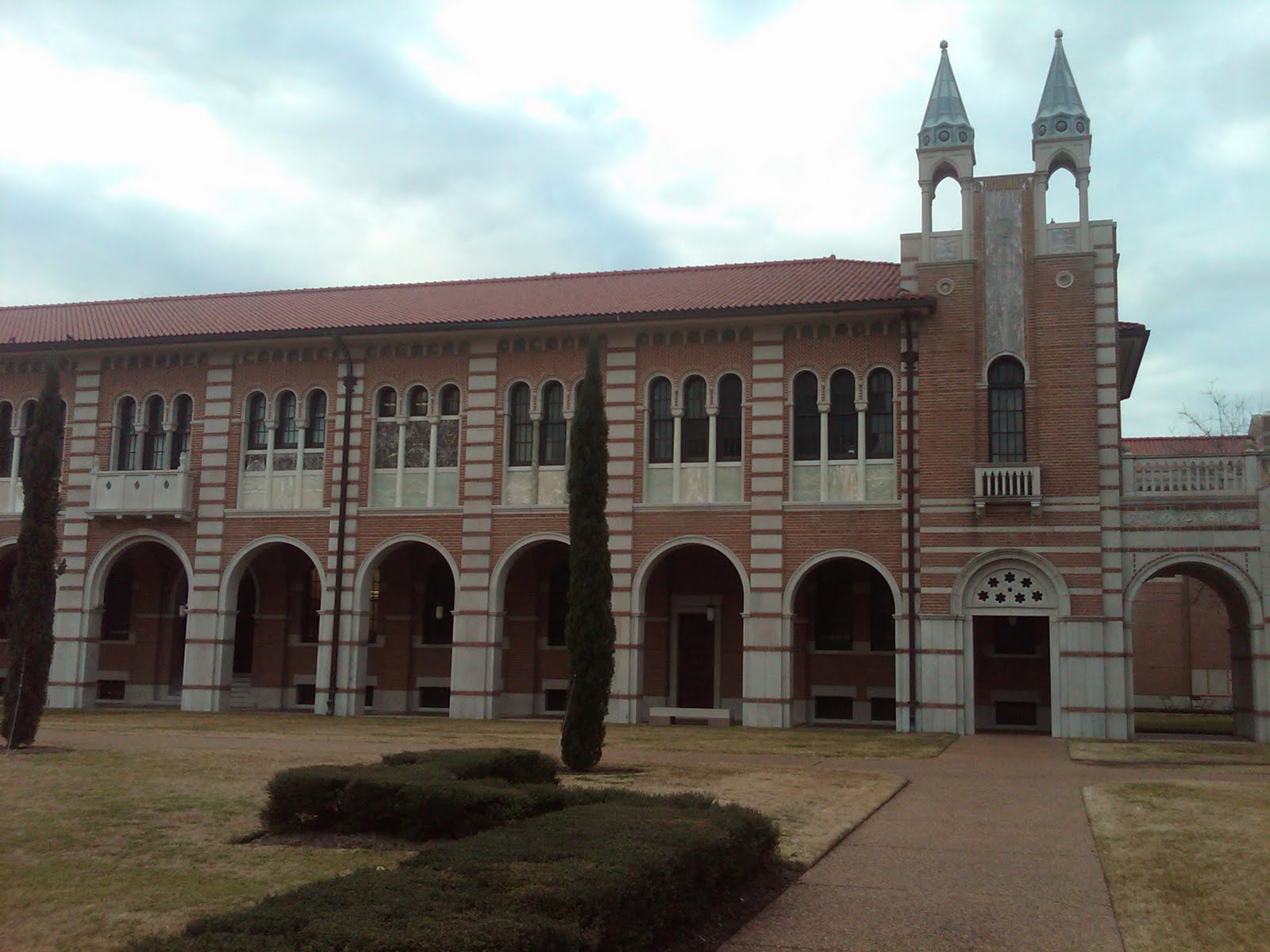
Rice University, an arborist's oasis in the museum district of Houston, combines spectacular regional architecture with perhaps the nation's best preserve of southern live oak trees. These beautiful evergreens dominate the campus ambience. The Lynn R. Lowrey Arboretum, consisting of more than 4000 trees and shrubs (giving birth to the legend that Rice has a tree for every student), is spread throughout the campus.

It is reminiscent of Swarthmore College, Haverford College, and Vanderbilt University, whose campuses are conferred with national arboretum designations. The campus opened in 1912 with Lovett Hall. Nearly every building on campus is Byzantine in style, with sand and pink-colored bricks, large archways and columns.


Saturday, February 19, 2011

San Jacinto Monument, La Porte, Texas

Just east of Houston, the San Jacinto Monument commemorates the site of the Battle of San Jacinto, the decisive battle of the Texas Revolution. Led by General Sam Houston, the Texas Army engaged and defeated General Antonio López de Santa Anna's Mexican forces in a fight that lasted just 18 minutes. About 700 of the Mexican soldiers were killed and 730 captured, while only 9 Texans died. The monument, completed in 1939, is the world's tallest monumental column and is part of the San Jacinto Battleground State Historic Site. A small free ferry provides car access from the north. The 567-foot art deco tower made of Texas Cordova shellstone, is taller than the Washington Monument. The bronze doors which allow entry into the museum show the six flags of Texas. At the top of the monument is a 220-ton star, representing the Lone Star of Texas. The USS Texas battleship is nearby, the only surviving battleship that served in both World Wars.


Thursday, January 13, 2011

East End Historic District, Galveston, Texas


Anyone who is doubts that there exist tres cool locations in Texas best make a beeline for Galveston - I dare say it is a miniature New Orleans, well, maybe Savannah. From an architectural standpoint, it is as if time was frozen circa 1890, the Strand area downtown is magical as are the few surviving mansions on Broadway, known in its day as "Castle Row." So how did this happen, all this fabulous architecture on an island one hour south of Houston ?

The surprise is that Galveston, in the 1890s was the largest port west of the Mississippi. Huge wealth was created on this small island, much evidence then wiped off the face of the earth with the devastating 1900 hurricane (the worst natural disaster in U.S. history). Many of the mansions were totalled. The recent devastation of Hurricane Ike (9/13/2008) is a sobering reminder. That event created a saltwater storm surge that virtually wiped out 40,000 signature southern live oaks in the city. Ironically, these century-old live oaks were planted after the 1900 hurricane. Live oaks derive their name because they are evergreens and do not go dormant in the winter. See www.monumentaltrees.com/en/trees/liveoak.


Gresham Castle, Galveston, Texas


Gresham Castle is on Broadway at 14th St. in Galveston. Gresham was a railroad magnate and built this Victorian mansion in 1887 just as Galveston was peaking as the "Wall Street" of the south due to its preeminence as the largest port west of the Mississippi River. Likewise, Galveston was the wealthiest city west of the Mississippi from 1890 until the disastrous 1900 hurricane, which virtually wiped the city off the map. At that time, Houston to the north was in its infancy.


Thursday, December 30, 2010

The New York Public Library, Manhattan


The New York Public Library faces 5th Ave. between 40th and 42nd Sts. with Bryant Park in its backyard. It is a massive Beaux-Arts marble edifice, designed by Carrère & Hastings, the largest marble building in the U.S. at the time it was completed in 1911. The glorious Main Reading Room is 78 ft wide, 297 ft long under 52 ft high painted ceilings, with grand chandeliers throughout. It is one of the World's great interior spaces.

The library has Thomas Jefferson's personal copy of the Declaration of Independence written in his own hand.

It is fascinating to consider that the previous structure was the Old Croton Reservoir (1842) done in an interesting Egyptian design (see figure) comprised of massive sloped walls of granite and gneiss, by architect James Renwick, Jr. By 1900, the reservoir was dismantled by virtue of the delivery of water through underground mains. According to The New York Times (1/23/11), there are still some fragments of the reservoir's foundation within the library.


Tuesday, December 21, 2010

West 42nd St., Manhattan


On far West 42nd St., there are some spectacular residential towers. The flagship is Atelier, between 11th and 12th, designed by Costas Kondylis, who also designed Silver Towers, between 10th and 11th.