Saturday, December 3, 2011

Rock View Lodge, Annai, Guyana


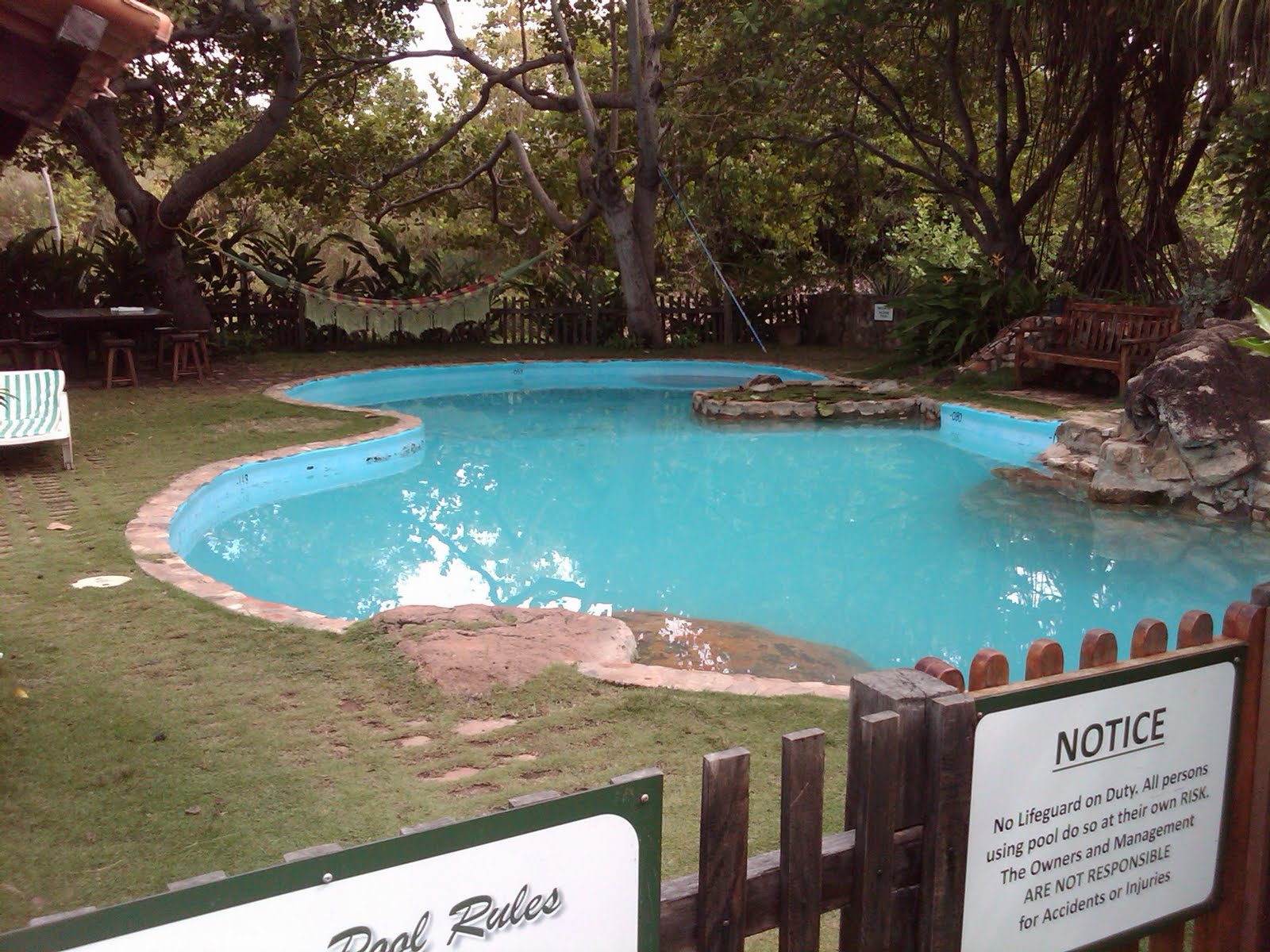
Annai is in the Northern Rupununi and serves as the southern gateway to the Iwokrama Rainforest. The dirt landing strip sits right in front of the idyllic Rock View Lodge, so named for a giant rock (photo) and viewing patio (photo) next to the main house. We flew in on another Cessna, courtesy of TGA (Trans Guyana Airways). Colin Edwards, a gregarious Englishman, purchased the property in 1992, the remnants of a cattle ranch. Before WWII, this huge savanna was a huge cattle ground, but the remote location forced cattle to be marched north through the rainforest to Georgetown, accompanied by a 50% attrition rate and near starvation for the herd. The airstrip was built to fly butchered meat in Dakota DC3 aircraft (see photo of Dakota bar). This business waned by the 1980s. Gatherings at the Dakota Bar may have contributed to the Rupununi Uprising in 1969, an effort to secede from Guyana.

Colin Edwards has pioneered growth in the region in terms of negotiating the construction of the main road from Georgetown, job creation, tourism, and education for the local Amerindians. He has created an oasis in the savanna and has done it with inimitable and great style. Extensive vegetable gardens provide fresh food for guests. The huge tree is a mango tree. The pool may be the only one in the Rupununi. The Main House is filled with books that his elderly parents brought over when they came to live their final days (they are buried on the grounds, next to a boy who died of a rattlesnake bite, photo)






Friday, December 2, 2011

Cara Lodge, Georgetown, Guyana


The 1840s Cara Lodge is one of the finest examples of 19th century colonial wooden architecture, incorporating the Demerara windows, in Georgetown. These hinged windows were designed to pick up the breezes from the nearby Demerara River. Note the exquisite handiwork on the side panel carvings. The boxed area could accommodate ice slabs to help with cooling. Inside, the Bottle Bar Restaurant is one of Georgetown's best restaurants.


Orinduik Falls, Ireng River, Guyana

Orinduik Falls are on the Ireng River, about a 20 minute Cessna ride southwest of Kaieteur, forming the border of Brazil. These falls are located on the sun-scorched grassy savannas of the Pakaraima Mountain foothills, in stark distinction to the dense rain forest surrounding Kaieteur Falls. The difference is stunning. The onset of the savanna is known as the Rupununi, occupying the lower 1/3 of Guyana. All that is there are a few sparse houses and a dirt landing strip.


I would challenge any seasoned traveler to find a better and more dramatic "swimming hole" in the world. The breathless scenery is only mildly tempered by the nasty kaboura flies (Pauline Melville comments on them in her Ventriloquist's Tale, p. 98).


Kaieteur Falls, Potaro River, Kaieteur National Park, Guyana

Kaieteur Falls, from 3rd lookout, the Rainbow View, and up close above the Falls. Those wishing to see great visuals should watch Werner Herzog's 2005 documentary film The White Diamond, about an attempt to build a balloon to sail over the jungle canopy at Kaieteur. A highlight is the capture on film of the thousands of swifts that dive bomb, at dusk, the Falls to reach their nesting spot behind the curtain of water.

Note the absence of guard rails and the rainbows through the mist.


"Boy Scout" View, Kaieteur Falls, Potaro River, Kaieteur National Park, Guyana


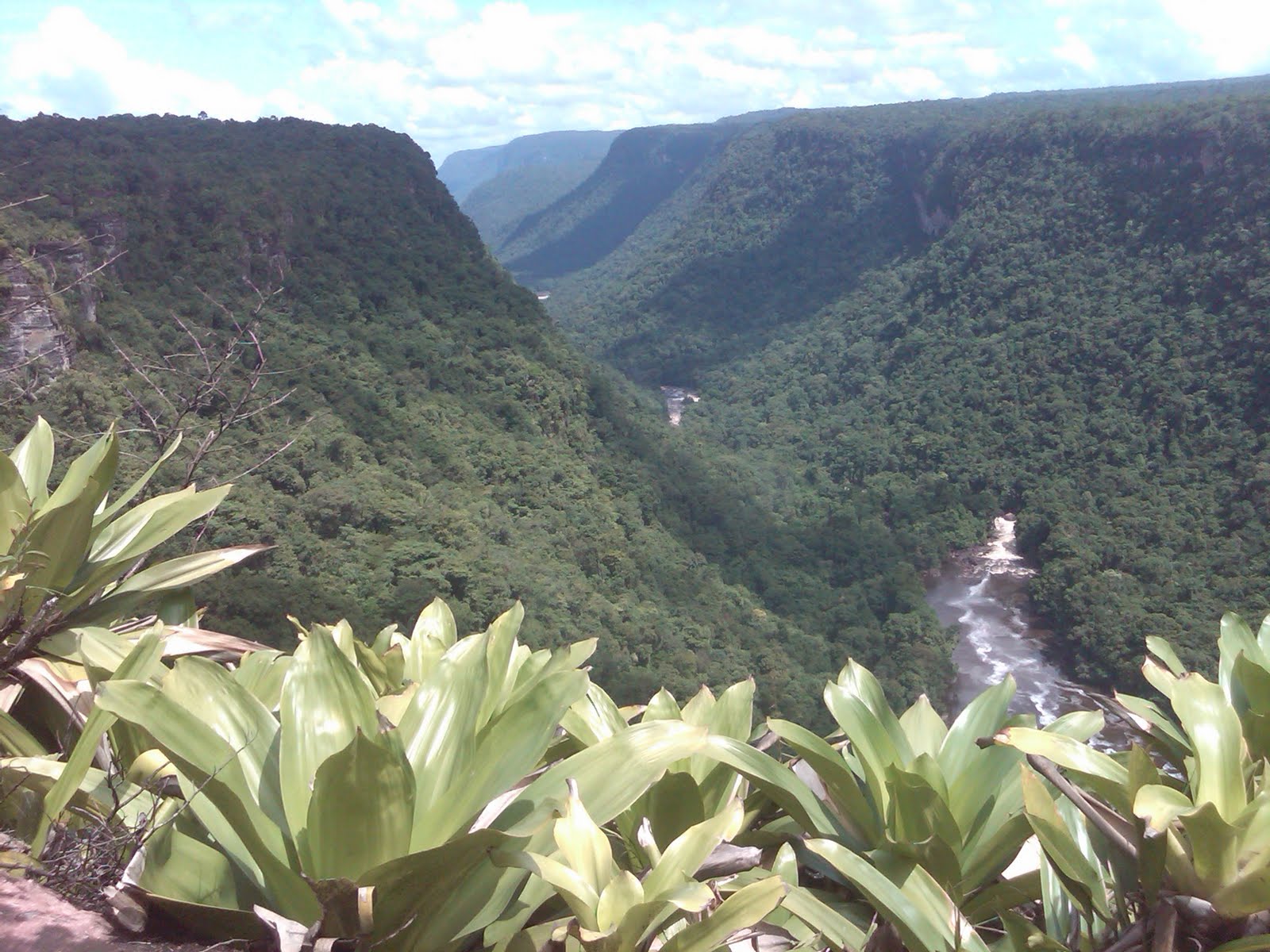
The name "Guyana" derives from "land of many waters." Kaieteur Falls is the crown jewel in Guyana's extensive park system. Located in the Central Rainforest, it is the highest single-drop waterfall in the world at 741 feet (5X Niagara Falls). In 1929, the British Colonial Administration designated 45 square miles surrounding the Falls as a national park, one of the first such acts in Latin America or the Caribbean. The name comes from a Patamona Amerindian chief Kai ("teur" means falls). Kai paddled over the Falls to appease angry gods. Due to its remote location, there are no kitschy shops or guardrails. Here, Nature appears as it did in 1870 when "discovered" by Barrington Browne.

We flew a Cessna Caravan C208B (12-seater) single turboprop engine charter plane (Air Services Ltd.) from Ogle airport in Georgetown a bit more than an hour due south, bush flying at its best ! Four lookouts were available on the well-trod trail, including the Johnson View and the so-called "Boy Scout" view where the date "25-3-32" and "B.G. Boy Scouts" are chiseled into the stone from the days under British rule (British Guiana became Guyana in 1966). We managed to see both the Guianan cock-of-the-rocks (Guyana's poster bird attributable to the males' brilliant orange colorings complete with Mohawk) and the tiny golden poison dart dart frog (the world's most poisonous), that lives its entire life in the giant bromeliads' leaves (photo, right of center) atop Kaieteur Falls.


Sunday, November 20, 2011

Zuccotti Park, Manhattan, New York


Nobody ever heard of Zuccotti Park until this Privately Owned Public Space ("POP") was taken over by Occupy Wall Street ("OWS") on September 17. The POP designation is significant in granting certain rights to protesters staying there 24 hours, since it is not subject to curfews. The park's northwest corner is across the street from Four World Trade Center (photo). A block north provides a dramatic viewe of One World trade Center (photo).


Joie de Vivre (photo) by Mark di Suvero, a 70-foot-tall sculpture consisting of bright-red beams, was installed in Zuccotti Park in 2006.


Scenes of OWS protesters are from November 19. Amidst the commotion, New York City workers install Christmas lights on the trees. At the same time Egyptian protesters were in front of the Egyptian Mission to the UN on 44th St., only hours after the Egyptian Military had beaten down protesters in Tahrir Square, Cairo. Photo shows Gigi Ibrahim leading the group.